
Upload a Clear Photo
Drag an image in or tap to browse. An AI model places eight markers on your hairline, chin, forehead, cheekbones and jaw.
- Front-facing shot, even light
- Chin level, no tilt or angle
- Drag a marker to correct it
Free detector · all 7 face shapes
Upload a photo, take a selfie, or enter four measurements. The detector scores all seven face shapes and tells you which one you match — then points you to the hairstyles, glasses and grooming guides for it.
Nothing is uploaded · no sign-up · runs entirely in your browser
This is a guided measuring aid, not automatic face recognition. No face detection, biometric template or identification of any kind is performed.
Take a selfie
Your browser will ask permission first. The video stream stays on your device — no frame is ever uploaded, recorded or sent anywhere.
Line your face up inside the outline, look straight ahead, then capture.
Camera unavailable
Join over 100,000 people who have used this face shape analysis for better style, confidence and self-expression.


Definition & meaning
An oblong face shape is a face whose length-to-width ratio measures about 1.5:1 or higher, with the forehead, cheekbones and jawline sitting at close to equal width down both sides.
Three things put a face in this group. The first is vertical dominance: hairline to chin is clearly the biggest measurement, so length wins over width.
The second is even widths. Forehead, cheekbones and jaw measure close to one another, so the sides run almost parallel. That is what separates oblong from heart, which is widest at the forehead, and diamond, which is widest at the cheekbones.
The third is softness. The jawline curves and the chin is rounded or lightly tapered. Add a hard, squared-off jaw to the same long proportions and the shape is normally called a rectangle instead.
An oval face tapers toward the chin and sits at roughly 1.32:1 to 1.53:1. Those bands are the convention this calculator follows rather than a fixed standard, since published face-shape charts do not all agree on where the line sits.
Visual reference
This illustration marks the four measurements that decide the category, plus the jawline and chin details that separate oblong from its closest neighbours.
An oblong face reads as long: vertical length is the dominant measurement, while forehead, cheekbone and jaw widths stay close to one another.
Using the tool
There are four tabs on the tool above: photo upload, live camera, measurements and a seven-question quiz. Every tab returns the same output, your face shape, a match strength rating, and a styling guide filtered to your male or female selection.
Drag an image in or tap to browse. An AI model places eight markers on your hairline, chin, forehead, cheekbones and jaw.
Allow browser access, centre your face in the guide and snap. The frame is processed on your device and never uploads.
Take four numbers with a soft tape: face length, then forehead, cheekbone and jaw width at their widest points.
The result shows three things: the shape label, a match strength rating, and a styling guide split by your male or female selection. A borderline reading near 1.5 can sit between oval and oblong. If the match strength reads low, retake the photo with your hair fully back and your head level, since hair over the temples is the most common cause of a weak result.
What makes it different
Six things separate this from a written quiz or a guess in the mirror: four detection methods, on-device photo privacy, a transparent formula behind every result, markers you can correct yourself, styling advice split by gender, and free access with no sign-up.
Photo upload, live camera, manual measurements or a seven-question quiz. All four run the same proportion formula, so the label does not change with the method you pick.
Photo and camera analysis run in your browser through Google's MediaPipe FaceLandmarker, which maps 478 points and passes the eight that matter into the formula. Nothing leaves your device.
Every result traces back to four numbers. The ratio and the width-consistency figure sit next to the label, so it is something you can check rather than a verdict from a black box.
If a marker lands slightly off, drag it. The result recalculates from your corrected point and keeps the other measured points rather than resetting to a generic estimate.
Choosing male or female before analysis filters the styling guide, so the hairstyle, beard or makeup advice you see matches the result rather than covering everything at once.
No account, no app, no email. Reset the form and run another photo or a fresh set of measurements as many times as you need.
Self-check
Do you have an oblong face shape? Work through the list below. It is a self-assessment rather than a test: the more statements that describe your reflection, the more useful the oblong styling advice on this site will be.
Tick the statements that sound like you.
Confirm with the quizFace shape is a descriptive category used for styling, not a scientific measurement. Ticking most of these boxes means an oblong-focused approach is a sensible starting point — it is not a diagnosis, and plenty of faces sit between two shapes.
In numbers
The checklist above is the quick version. These four are the measurements behind it, and where the numbers usually land on an oblong face.
Step by step
You need a soft tape measure (or a piece of string and a ruler), a mirror, and your hair pulled back off your face. Four measurements are enough to place almost any face.
Step 1
Measure across the widest part of your forehead, roughly halfway between your eyebrows and your hairline.
Tip: Keep the tape horizontal and measure straight across, not around the curve of your head.
Step 2
Measure from the outer peak of one cheekbone, just below the outer corner of the eye, straight across to the other.
Tip: Find the bony ridge with your fingertips first, then measure point to point.
Step 3
Measure across the widest part of your jaw, usually about an inch below your ears.
Tip: Measure the width, not the perimeter — a straight line from side to side.
Step 4
Measure straight down the centre of your face, from your hairline to the base of your chin.
Tip: Stand square to the mirror. Tilting your head shortens the reading.
Measure twice and use the average. Small differences between readings are normal, and face shape is a descriptive category rather than an exact scientific classification — many people sit between two shapes.
Want the long version, including how to compare your numbers against every common shape? Read how to measure your face shape at home.
Tell them apart
Every shape oblong gets confused with, feature by feature. Scroll the table sideways on a small screen; the comparison guides below cover the closest three in full.
| Feature | Oblong | Oval | Diamond | Rectangle | Round | Square | Heart |
|---|---|---|---|---|---|---|---|
| Overall proportion | Clearly longer than wide | Moderately longer than wide | Long, similar to oblong | Longer than wide | About as wide as it is long | About as wide as it is long | Longer than wide |
| Widest point | No strong winner, widths are close | Cheekbones, slightly | Cheekbones, distinctly | No strong winner, widths are close | Cheekbones | No strong winner, widths are close | Forehead |
| Forehead | Tall, similar width to the jaw | Slightly narrower than cheekbones | Narrow | Broad and square at the temples | Narrower than the cheekbones | Broad, similar width to the jaw | Widest of the three widths |
| Jawline | Soft and curved | Rounded, gently tapered | Narrow, tapered | Angular and squared | Soft, fully curved | Angular with visible corners | Narrow, tapering inward |
| Chin | Rounded or lightly tapered | Softly rounded | Pointed | Flat or square | Rounded | Squared or flat | Pointed or narrow |
| Quickest tell | Long face, even widths, soft jaw | Balanced taper toward the chin | Cheekbones much wider than forehead and jaw | Long face with hard jaw corners | Length and width run close, all curves | Equal proportions with a hard jaw | Wide forehead narrowing to a small chin |
Hair
The working rule is to add width at the sides and cut visual length off the top. Bangs, side-swept styles and volume above the ears push that way; height at the crown and centre parts push the other.
Approach With Care
Pompadours, faux hawks and high top fades all add height at the crown. A close buzz suits a well-defined jaw, but it removes the width a longer style would add.
Approach With Care
Very long, straight, layer-free hair pulls the eye downward. Centre parts, sleek high ponytails and tall updos work the same way, removing width at the sides.
Eyewear
Frame width matters more than frame shape here. A pair wider than it is tall balances the length of the face; a narrow or rimless pair does the opposite.
Approach With Care
Narrow frames, very shallow lenses and rimless styles add almost no horizontal line, so the face keeps reading as long.
Approach With Care
Small, narrow or sharply geometric frames sit inside the width of the face rather than extending past it, the same problem narrow glasses have.
Grooming
Beard shape, makeup placement and brow shape follow the same rule as hair and frames: add width, avoid extra length. Necklines and accessories work the same way, so boat necks and wide collars help too.
Approach With Care
Long pointed goatees, narrow chin straps and thin soul patches all add length straight down the centre of the face.
Approach With Care
A high, sharply peaked arch and very thin brows both draw the eye upward toward the hairline. Fuller brows read as a horizontal block above the eyes.
Public references
Public faces make the traits above easier to recognise in a mirror. The people below are commonly cited in style and grooming coverage as oblong examples, so treat them as visual references rather than measured classifications.
Male references
Female references
Nobody publishes measured face-shape data for public figures, so these are references drawn from how each person is described in style writing, not statements of fact about anyone's proportions. Your own measurements are the only ones that decide your result.
Latest from the library
The three most recently published guides. Every one picks up where the detector stops, with the measurements, comparisons and styling decisions in full.

Beard styles that suit an oblong face: stubble, short boxed and squared full beards, where to set the cheek line and neckline, and what to approach with care.
Read the guide
How earring width, length and volume change the proportions people see on a long face, which styles add width, and how to wear long drops without lengthening.
Read the guide
Frames that suit an oblong face on men: wide rectangles, browlines, round and navigator shapes, the measurements to check, and what works less well.
Read the guide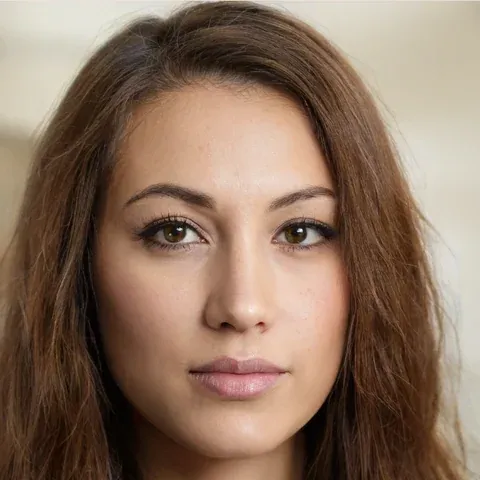
About the author
Face shape specialist
Founder and editor of Oblong Face Shape
Ayla founded Oblong Face Shape to fix a specific problem: most face shape advice online tells you what to do without telling you why, and most face shape quizzes return a label without showing the numbers behind it.
Every guide on this site explains the mechanism first, then the recommendation. Every detector result shows the four measurements it used and scores all seven shapes, so you can check the answer rather than take it on trust.
Short, direct answers to the questions readers ask most about the oblong face shape.
An oblong face shape comes down to four numbers, face length, forehead width, cheekbone width and jaw width, run through a length-to-width ratio. Upload a photo, turn on the live camera, or type those four measurements into the tool above to get your own result, then use the hairstyle, glasses, beard and makeup advice on this page to work with your proportions rather than against them.